Panel: Clean Cooking and Carbon Markets – Delivering Social Impact with Integrity
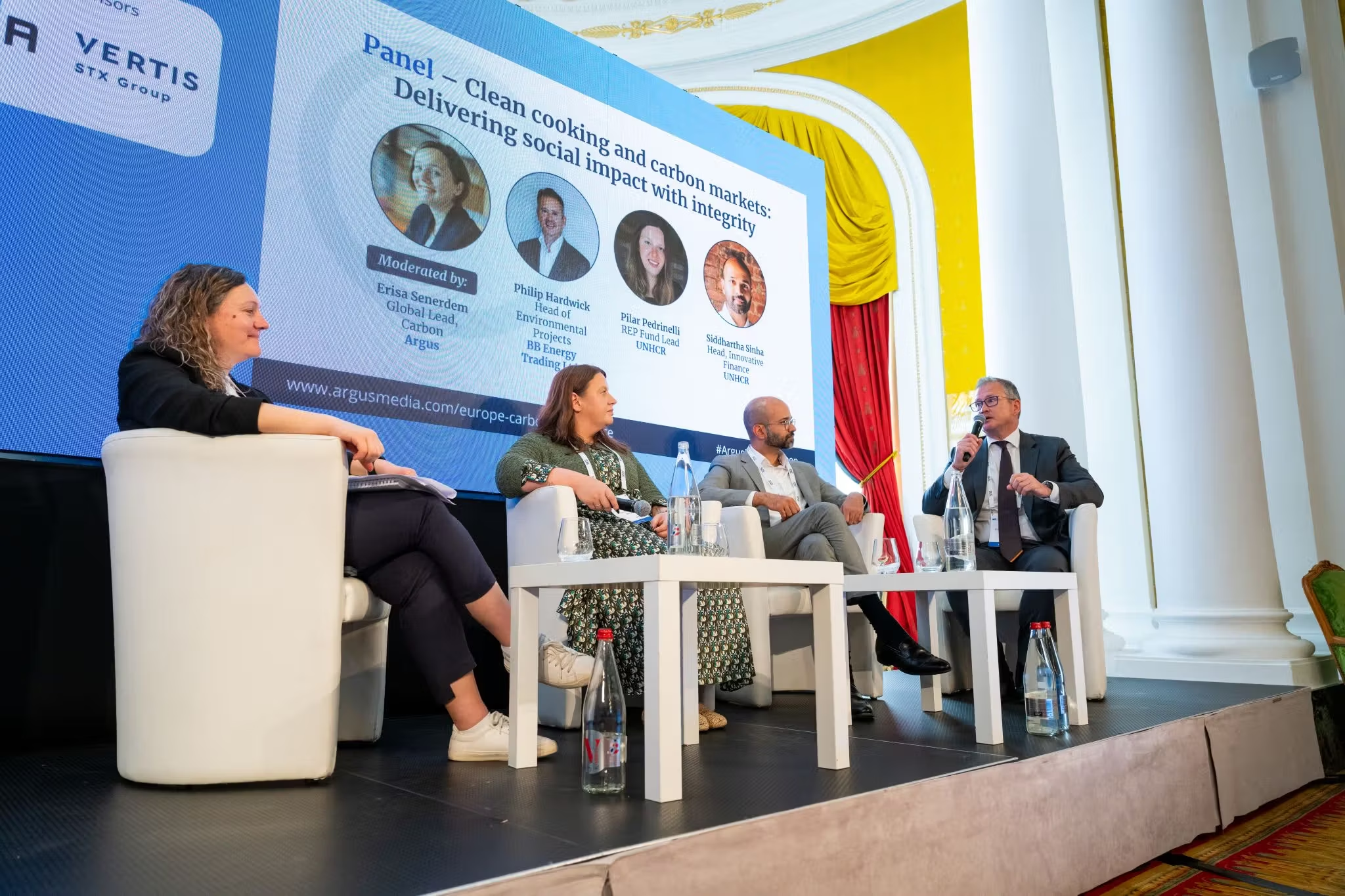
A key highlight of the conference for our team was Wednesday’s panel session. Philip Hardwick (CEO, Everpath) joined Siddhartha Sinha (Head of Innovative Finance, UNHCR) and Pilar Pedrinelli (UNHCR REP Fund Lead), with moderation from Erisa Senerdem (Argus) and a spotlight introduction from Eva del Río Tortosa.
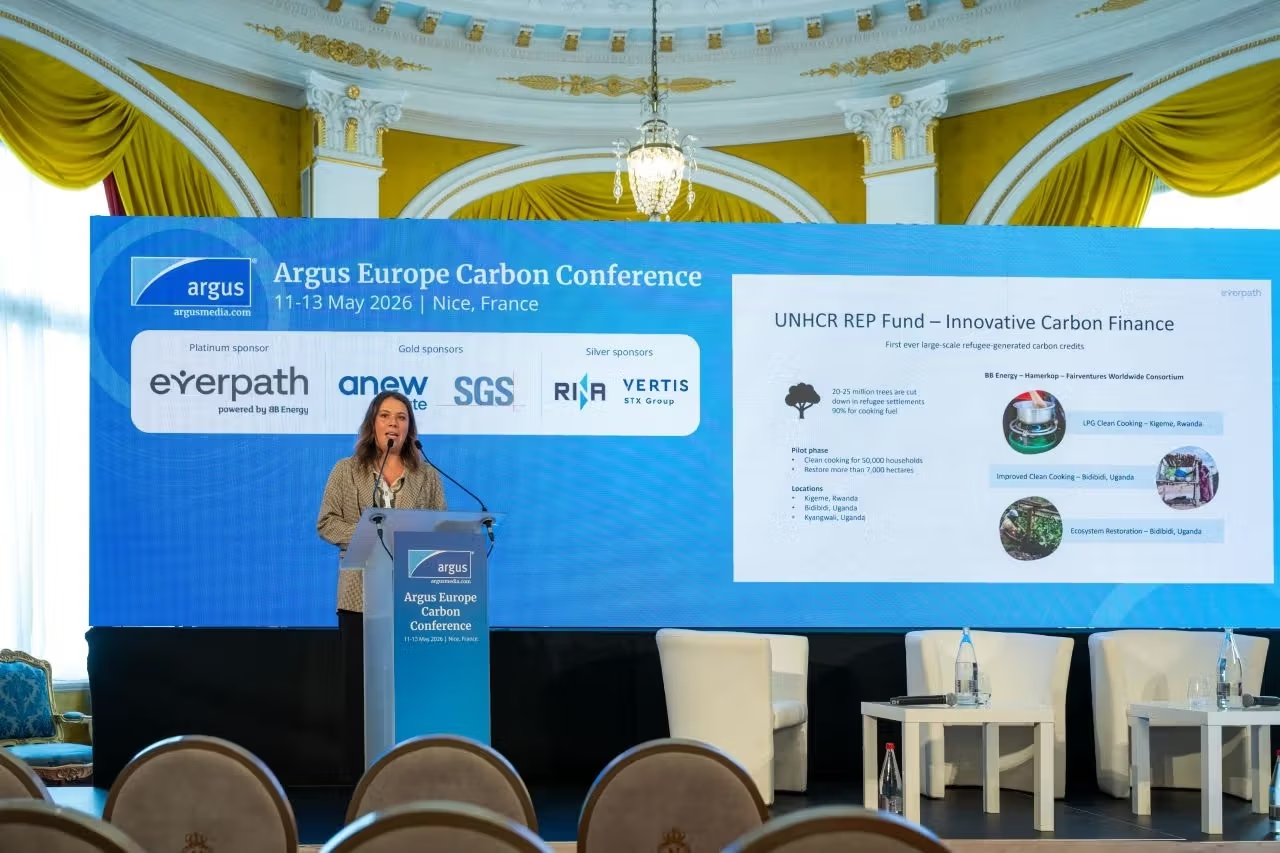
Eva opened by outlining the scale of the financing gap across humanitarian, climate, and development sectors, noting that in 2025 only 25% of the UN’s USD 47 billion humanitarian appeal was funded, alongside wider shortfalls in climate and development finance. As public funding declines, these interconnected challenges are increasingly driving the need to mobilise private capital. In this context, carbon markets are emerging as one mechanism to support both emissions reductions and tangible social outcomes in vulnerable settings.
This approach is reflected in projects developed under the UNHCR Refugee Environmental Protection (REP) Fund, where Everpath is part of the selected consortium delivering clean cooking and reforestation initiatives in refugee settings. This includes efficient cooking and ecosystem restoration in Bidibidi (Uganda), as well as an LPG clean cooking project in Kigeme (Rwanda).
A deeper focus was given to LPG in Kigeme due to its strong suitability for refugee contexts. The project aims to replace fuelwood with LPG, reducing cooking-related emissions by up to 60% while addressing deforestation and environmental degradation. LPG also offers practical advantages in these settings, as a portable, efficient and scalable solution, with clear social impact including improved air quality, reduced health risks, time savings, and lower exposure to fuel-related conflict.
Delivering these outcomes relies on a strong focus on integrity, with continuous community engagement, co-designed benefit sharing, and adaptive project design ensuring that interventions remain aligned with local needs and realities over time.
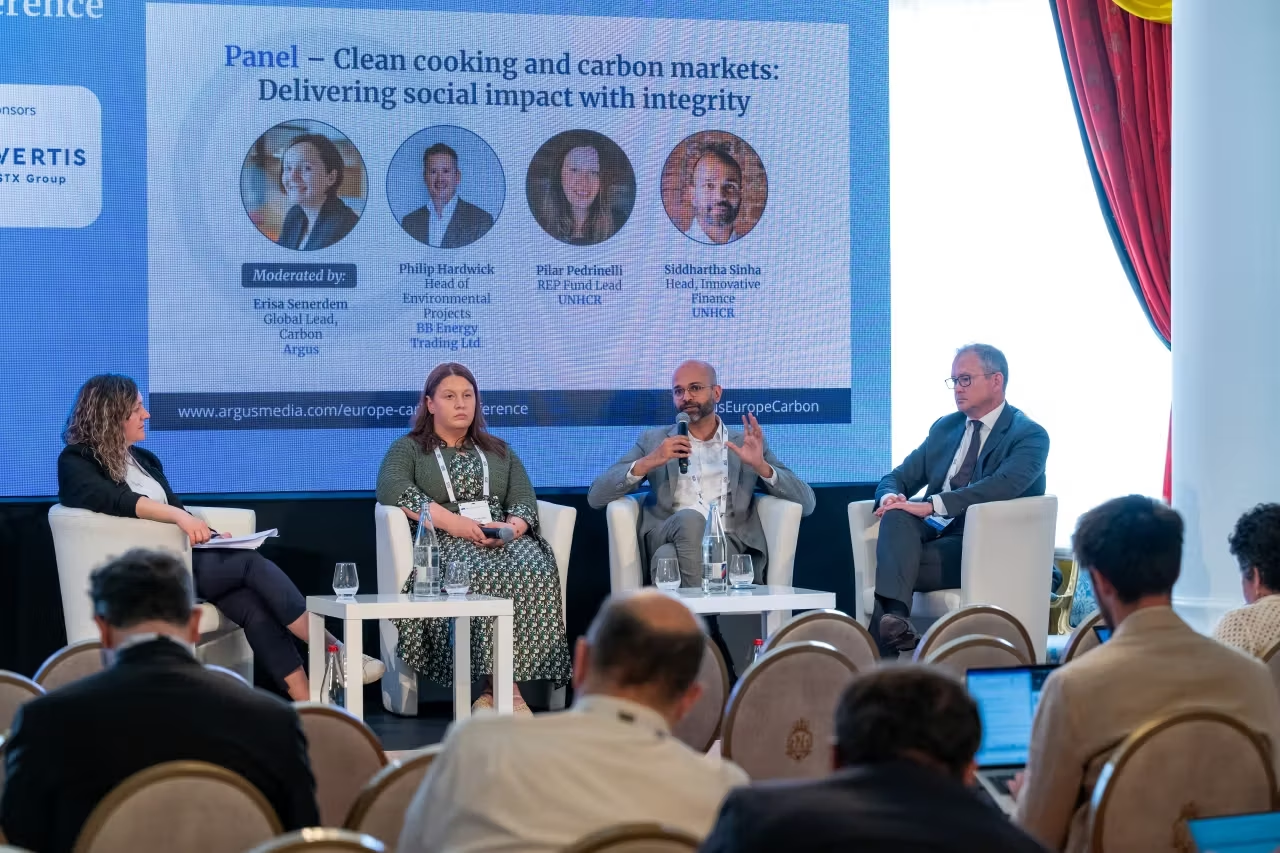
Key reflections from the panel
- Social impact is at the centre of carbon initiatives, becoming a key benchmark for quality as climate action is increasingly understood within its broader social and community context.
- Grant funding provides patient capital focused on social impact rather than immediate financial returns, allowing projects to take the time needed to deliver durable outcomes, particularly in complex humanitarian contexts where implementation cannot be rushed.
- UN partnerships are uniquely valuable, collaboration with host governments provides a level of trust and convening power that traditional project developers cannot achieve independently.
- Compliance markets are increasingly central; there is a growing recognition that voluntary demand alone is insufficient. Integration with compliance markets will be essential to unlock the scale of investment required.
- Projects require time and alignment, meaningful engagement must occur across local communities, district authorities, national governments, and global stakeholders. Attempting to shortcut this process risks undermining long-term durability.
- Bridging adaptation and mitigation are critical, projects like ours demonstrate how carbon finance can deliver both, addressing a gap that has historically limited the effectiveness of voluntary carbon markets.

What We Heard Across the Conference
Beyond our own session, conversations across the three days reinforced themes that speak directly to Everpath's work and the broader direction of carbon markets.
Carbon as a kicker, not the anchor
Carbon revenue should enhance project economics rather than serve as the primary investment driver. Projects relying solely on carbon income are inherently fragile, whereas those with diversified revenue streams and strong development fundamentals are more resilient and attractive to investors.
CORSIA, the EU ETS, and shifting compliance demand
The EU’s decision to include both departing and incoming flights under the EU ETS is reshaping demand dynamics. EU/EEA-based operators are seeing reduced CORSIA obligations on routes already covered by the ETS.
At the same time, CORSIA Phase 1 (2024–2026) has introduced real offsetting obligations, with the 2024 Sector Growth Factor set at 15.4%. These signals growing aviation demand for high-integrity credits, with expectations of an even higher SGF for 2025.
The LOA challenge and the role of local finance
Securing Letters of Authorisation (LOAs) from host governments required for Article 6 and CORSIA eligibility is emerging as a major bottleneck. A key takeaway was that local financing mechanisms are often the most effective way to build government relationships, demonstrate economic value, and ultimately unlock LOAs, rather than relying solely on international capital.
Corresponding Adjustments: a growing bottleneck
Progress on corresponding adjustments remains slow, largely due to delays in governments establishing carbon budgets and defining both conditional and unconditional NDC targets. This is restricting the flow of high-quality supply into the market.
Pricing signals pushing diversification of revenue streams across developers
Signals from CORSIA and other compliance frameworks are encouraging developers to diversify revenue streams and pursue higher-integrity pathways, including alignment with Article 6 mechanisms and the Core Carbon Principles (CCP) label.
Looking Ahead
The infrastructure for high-integrity carbon finance is taking shape. However, as, humanitarian funding gaps widen, and government processes around carbon budgets and Corresponding Adjustments remain slow, the need for robust legal and market frameworks is becoming increasingly urgent.
At Everpath, we believe the most durable projects sit at the intersection of climate, private capital, and social impact. Carbon finance, when structured with integrity and strong partnership, can be a powerful catalyst for long-term delivery.
To connect with our team: environmental.projects@bbenergy.com